Dr. Magdy Kamel El-Hewary Writes: What If Chechnya Joined Iran, Yemen, Iraq, and Lebanon in Confronting Israel and the United States ?

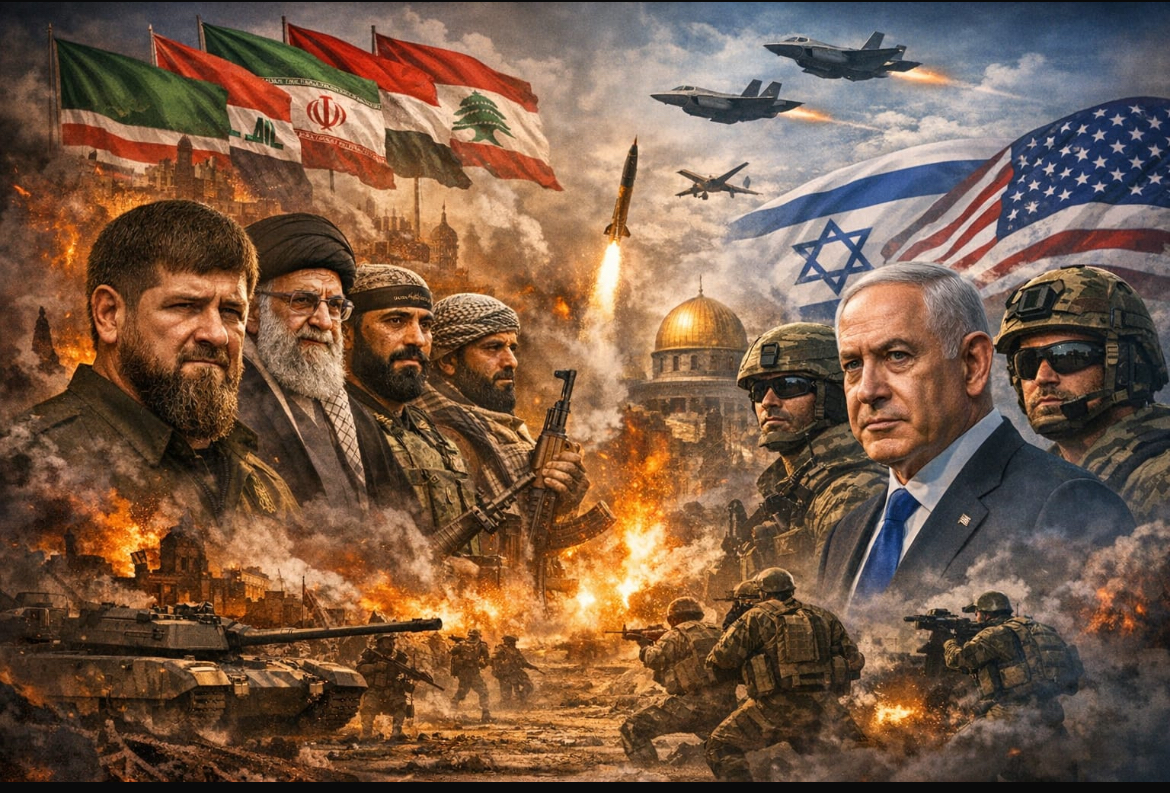
In a world where the balance of power is shifting at an unprecedented pace, the Middle East and its surrounding conflict zones remain an open arena for all possible scenarios—even those that seem distant or purely hypothetical. Among the most controversial of these scenarios is the question: what if Chechnya were to join an محور that includes Iran, Yemen, Iraq, and Lebanon in confronting Israel and the United States?
First: The Geopolitical Dimension
Chechnya, located within the Russian Federation, is not a fully independent state in the political sense, but rather operates under Russian sovereignty. This makes any direct involvement in a large-scale regional conflict contingent upon a decision from the Kremlin. The key question then arises: would Moscow allow even indirect participation in an open confrontation with Washington?
The most realistic assessment suggests that Russia could use Chechnya as an unconventional pressure card without formal engagement, maintaining a delicate balance between escalation and plausible deniability.
Second: Asymmetric Military Capabilities
Chechnya is known for its highly specialized combat forces, particularly experienced in urban warfare and irregular combat. If such forces were to join this hypothetical alliance, they could provide a qualitative advantage in areas such as:
Special operations
Guerrilla warfare
Combat in complex environments
This could shift the nature of the conflict from conventional warfare to a prolonged war of attrition.
Third: Unified Front or Conflicting Interests?
Although Iran and its regional allies operate within what is often referred to as the “Resistance Axis,” the reality reveals significant differences in interests and strategies among its members. The introduction of a new actor like Chechnya could either:
Strengthen political and psychological momentum
Or create new complexities in military coordination
Particularly given the diversity in cultural and political backgrounds.
Fourth: The U.S. and Israeli Response
Any such alliance—even as a hypothetical construct—would likely trigger a decisive response from Washington and Tel Aviv. This response could include:
Direct or indirect military escalation
Expanded sanctions
Targeting allied military infrastructure
The United States, in particular, would be unlikely to tolerate the emergence of a multinational force threatening its influence in the region without preemptive action.
Fifth: Are We Facing a Mini Global War?
This scenario opens the door to the possibility of a “mini global war,” where the interests of major powers such as Russia and the United States intersect on already volatile ground.
However, this hypothesis remains constrained by several key factors:
The balance of international deterrence
The risk of nuclear escalation
Global economic interdependencies
Conclusion
Chechnya’s hypothetical inclusion in an alliance confronting Israel and the United States would not merely be a numerical addition to a military equation, but a qualitative shift that could reshape the entire nature of the conflict. Nevertheless, this scenario remains closer to a political pressure tool than a realistically executable plan, given the complexity of international relations and overlapping interests.
In the end, the question remains open: is the world on the verge of unconventional alliances that could redefine global balance, or will such scenarios remain confined to the realm of political analysis?